01 MSc Research
A buoyancy-driven indoor blimp that flies without propellers
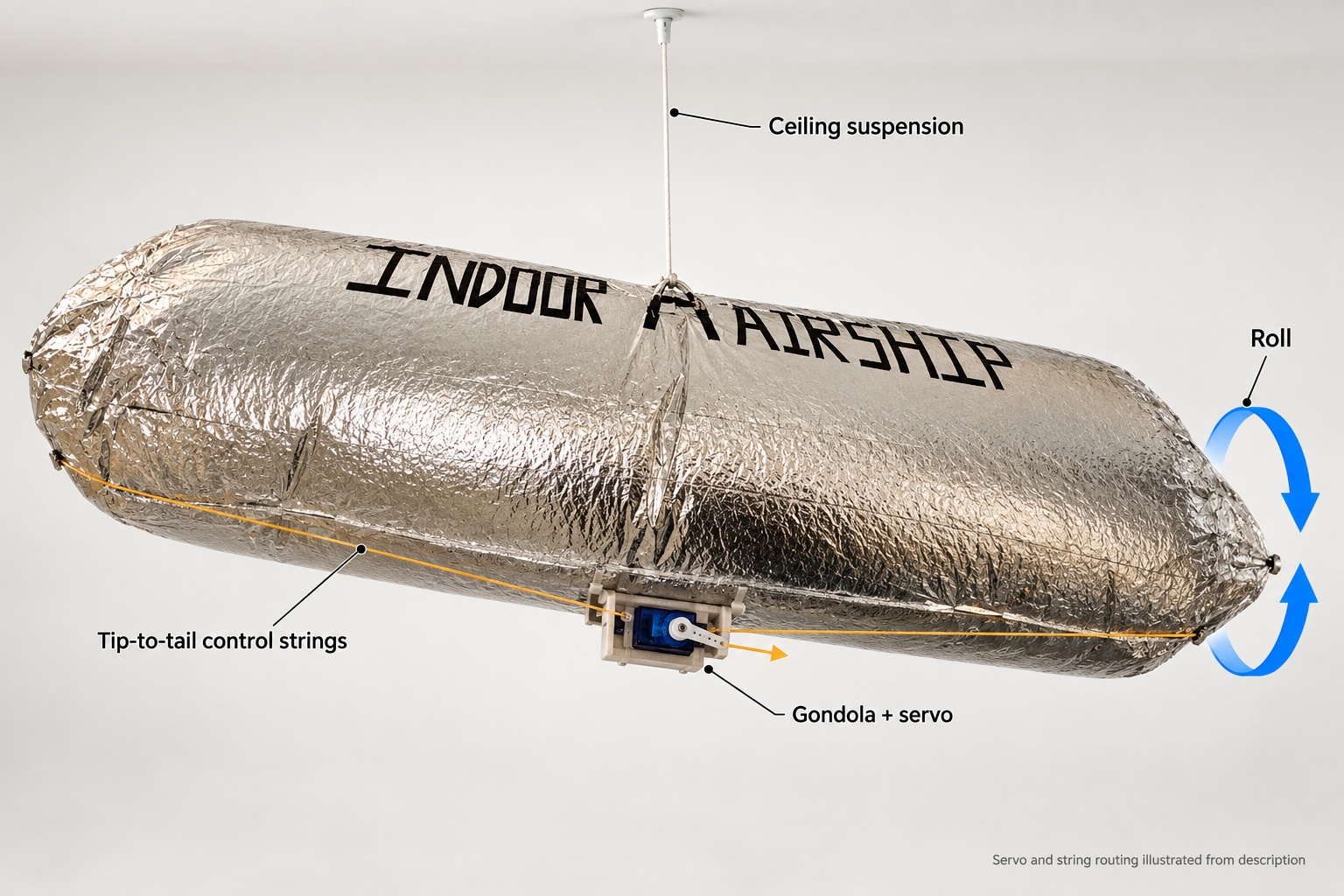
Rotor drones can only fly for minutes inside tanks, pipelines and test chambers, and they aren't safe near people. I designed a 57 g helium blimp that moves by changing its own buoyancy instead. A micro-pump fills a 50 mL ballonet to make it heavier and pitch it nose-down; venting does the opposite, so it glides in a sawtooth path. Two nose-to-tail lines on a single servo steer it.
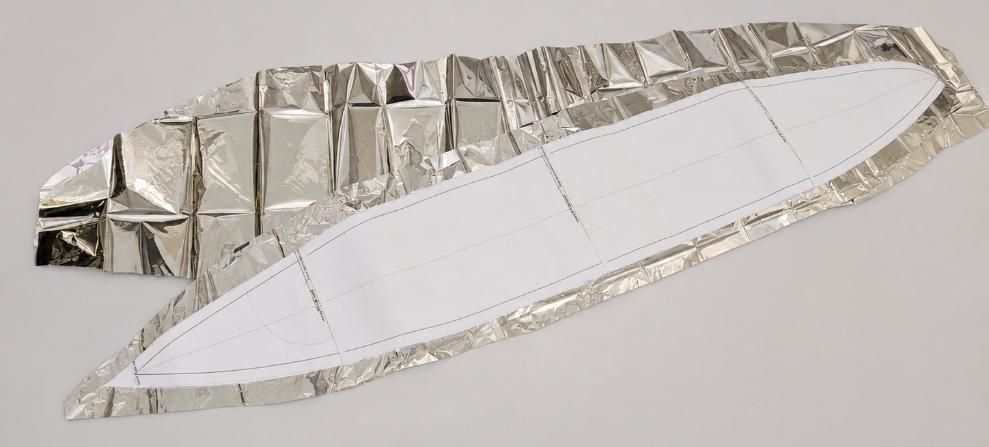
The envelope is a GNVR shape, 1008 mm long and 336 mm in diameter, made from eight heat-sealed gores of 15 µm Mylar. Its 59.3 L of helium lifts 61.3 g, a 4.3 g margin over the vehicle's mass.
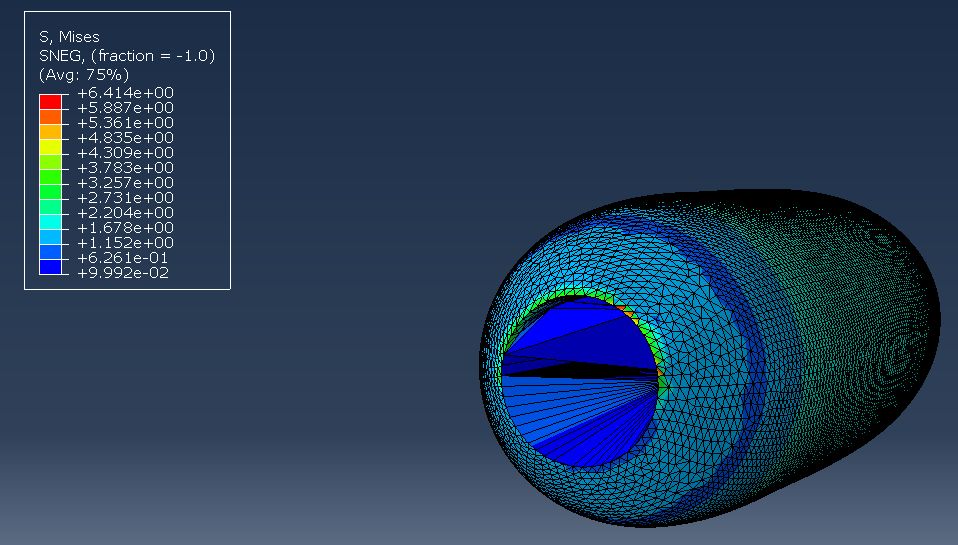
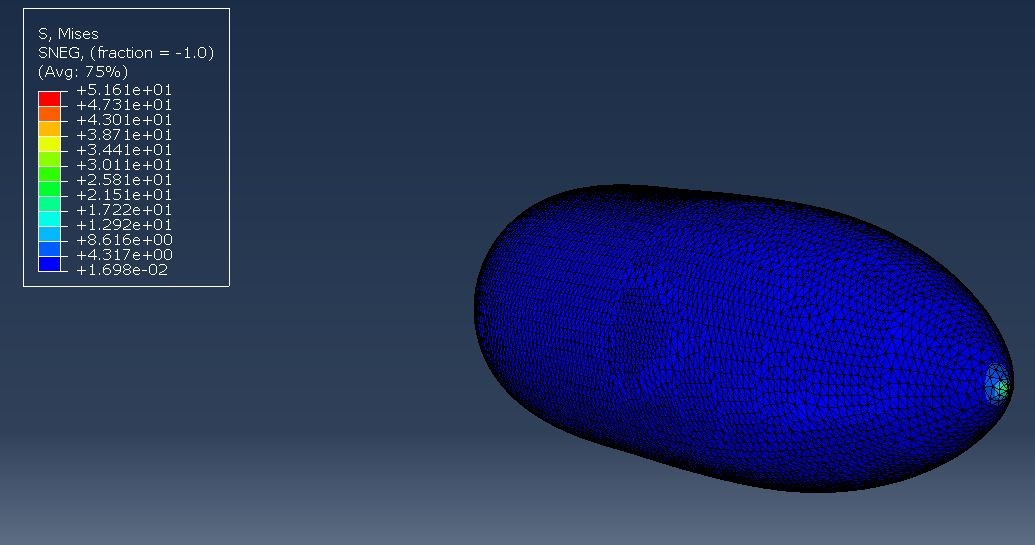
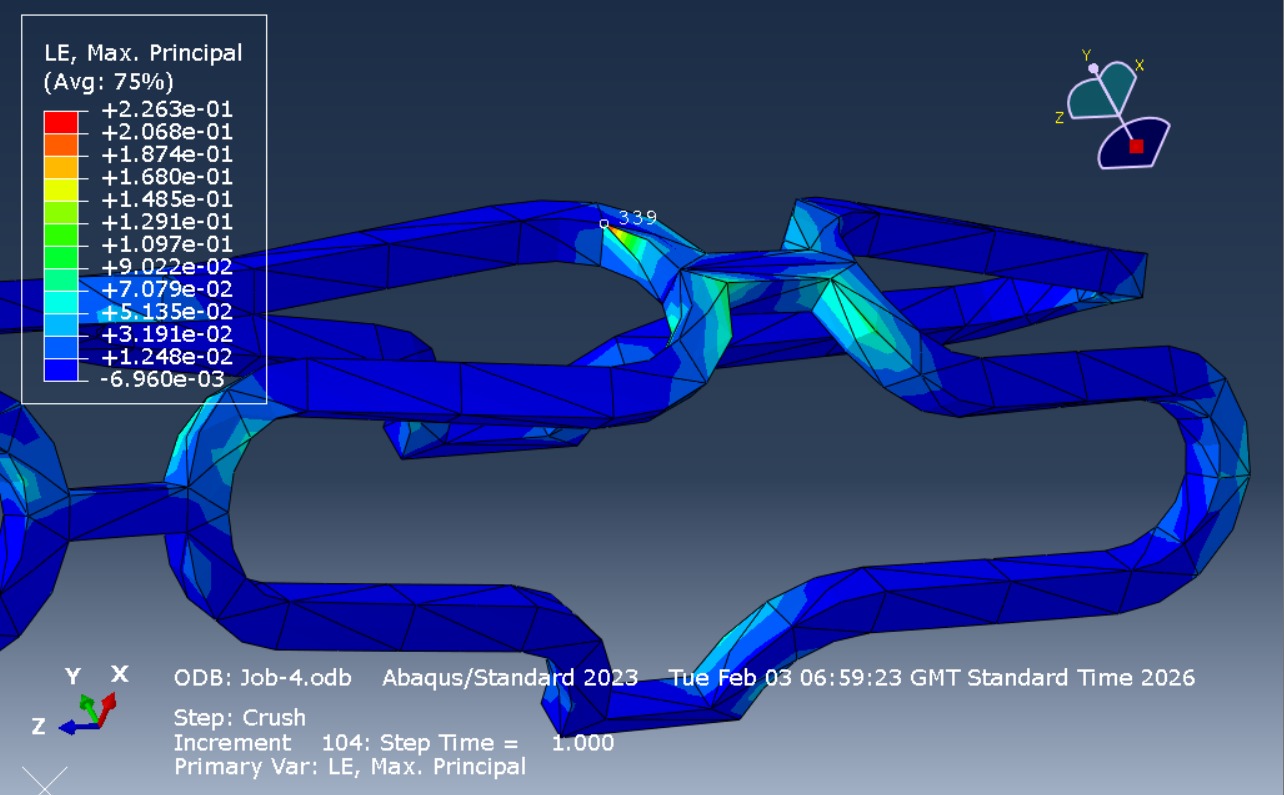
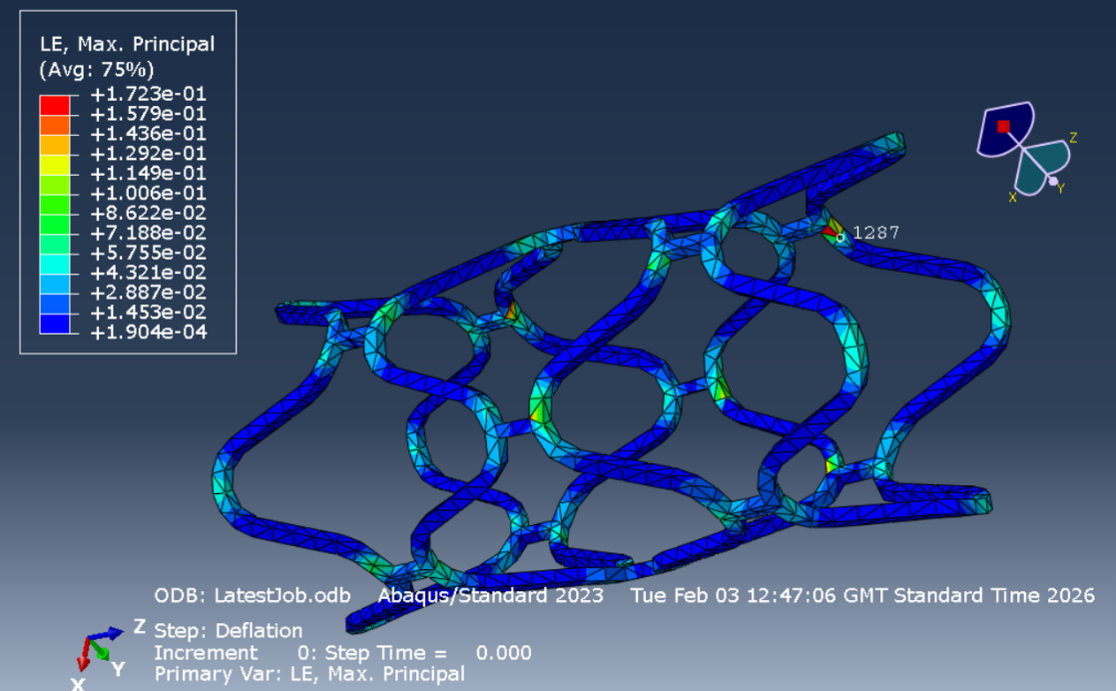
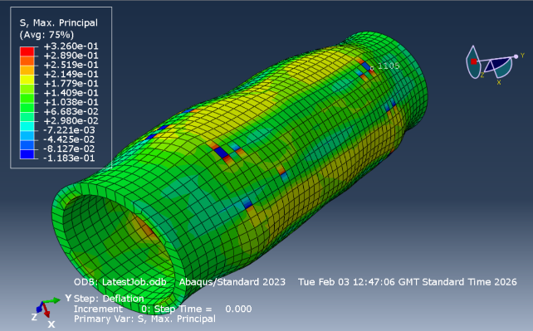
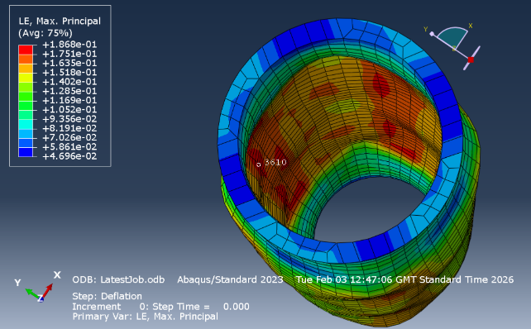
In Abaqus, using about 32,700 shell elements, the envelope at 200 Pa averaged 1.63 MPa, within 25% of the 2.24 MPa hoop-stress hand calculation and a factor of safety of about 54. The steering-line anchor was the critical case: a 10 N pull gave a 51.86 MPa local peak and a factor of safety of only 2.3, so I specified bonded reinforcement doublers at every anchor.
A six-state longitudinal model in MATLAB, integrated with fourth-order Runge-Kutta, settled into a stable sawtooth cycle: ±6.4° of pitch at an average 35.8 cm/s, covering 204 m in ten minutes. The duty-cycled energy budget gives about 7.4 hours on a 100 mAh battery.
The prototype is built, and a first ceiling-suspended test reached the commanded ±10° of roll. Free flight is the next step.
ToolsAbaqus, MATLAB, ANSYS Fluent, CAD, heat-sealed Mylar fabrication
Pitch now: 0.0°±6.4° pitch, 35.8 cm/s mean speed